Introduction
EVA beach bags look easy to print, but many prints peel after one trip. In this guide, we use an EVA bag printer workflow, and you will learn setup, curing, and quick QC checks, so you can ship clean, durable bag orders.
Define the Job: EVA Material Behaviors That Affect UV Printing
Why EVA can be difficult for ink adhesion (surface energy + flexibility)
EVA often feels “low-energy” at the surface, so ink prefers to sit on top instead of bonding well. Many bags also carry light residues from forming or handling, and they can look clean but still reduce adhesion. A print may look perfect right after curing, then start lifting after bending and rubbing. Flex makes it harder because bags twist, fold, and snap back during daily use. If the ink film cures too hard, it can crack on repeated flex cycles; if it cures too soft, it can smear or scuff. We should aim for a balanced film that survives real handling, not just a photo test.
Note:EVA can carry invisible oils from handling and forming, so cleaning matters more than most shops expect.
What “durability” really means for beach bags (sun, water, abrasion, bending)
Durability for beach bags means more than “it dries fast.” They face sunlight, water, sand abrasion, sunscreen contact, and repeated wet-dry cycles. Corners rub against towels and car trunks, and handles can scrape printed zones during carry. These stresses can expose weak adhesion or brittle curing very quickly. Placement becomes a durability decision: if we print on high-rub zones, we should expect stronger protection needs, such as varnish, better curing balance, or primer support. For B2B orders, it helps to define durability targets in simple tests like rub, bend, and tape pull, then align the process to those targets.
When you should consider pretreatment/primers for permanent results
Some EVA prints can work without primer, especially on textured EVA and for light-use products. But B2B buyers usually want consistent permanence across batches, suppliers, and seasons. Primer becomes valuable when EVA varies by supplier, when the surface is very smooth or glossy, or when the order volume makes rework costly. If you see easy scratch marks after curing, or edge lifting after bending, primer can stabilize results and reduce random failures. It adds cost per unit, but it often saves more by preventing reprints, delays, and customer disputes on repeat orders.
Design constraints on EVA: edges, seams, curves, and “full wrap” expectations
EVA beach bags rarely behave like flat boards. Seams, ribs, curves, and handle bases create height changes that can affect head clearance and dot placement. If the bag bulges, the head can crash, or the print can blur due to distance changes. If a buyer expects a full wrap design, you must confirm how the seam line will break the artwork and whether a continuous wrap is realistic on that bag shape. Multi-step printing and indexing can work, but they need alignment marks and fixture discipline. A clear proof and a measured print area prevent misunderstandings when the order scales.
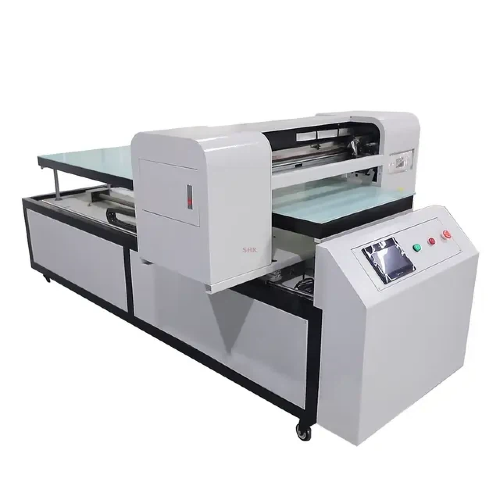
EVA Bag Printer Options: Pick the UV Setup That Matches Your Bag Shape
Flatbed vs. rotary UV printing for EVA beach bags (when each wins)
Flatbed UV printing works well for one-side logos, small runs, and fast sampling. You can fixture the bag, print the front panel, and move on quickly, which fits customized orders and frequent artwork changes. However, flatbed printing struggles when the surface is highly curved or when the design must wrap around the body. Rotary or rotation-capable printing often wins for wrap designs and rounded bodies, because the motion stays steady and dot placement remains consistent on curves. For a mixed product line, many B2B shops combine flatbed for quick front prints and rotation for wrap-heavy SKUs.
360° rotation printing: ideal use cases and production advantages
Rotation printing shines when artwork wraps, or when the buyer wants printing on multiple sides in one fixture cycle. It reduces manual repositioning errors because the bag stays mounted while you rotate and print the next area. This improves repeatability and helps protect fine lines and small text, which can drift when operators lift and place bags by hand. Rotation also supports branding programs where the same bag repeats across many batches. When the fixture and start point are consistent, repeat jobs become faster and cleaner, which can improve margins for contract printing.
Precision positioning for repeat jobs (why automatic positioning matters)
Many buyers reorder EVA bags, and they expect the same placement every time. Manual alignment can drift between operators, especially during long shifts. A camera-based positioning system or reliable registration method can reduce drift and speed up setup for small batches. Precision matters when logos must avoid seams, handle bases, or ribs. A strong EVA bag printer setup treats fixturing and positioning as part of production, not as optional accessories. Repeatability protects brand look, and it prevents “almost right” placement problems that cause complaints.
Ink configuration basics: CMYK + White + Varnish (what each layer is for)
EVA bags come in bright colors, and that makes white ink a major factor for consistent color. White underprint blocks the bag color from shifting CMYK tones and keeps the artwork vivid. For dark EVA, white is often mandatory; for light EVA, it still improves pop and reduces variation between batches. Varnish adds protection and style. It can reduce scuff visibility and improve cleanability, and it can create gloss or matte accents for premium looks. Layer control also supports light 3D texture effects, but it requires stable curing and careful film build control.
Tip:Ask buyers about white ink and varnish needs early, because it changes both cost and durability outcomes.
Bag requirement |
Best UV setup |
Why it helps |
What to watch |
One-side logo, small batch |
Flatbed |
Fast setup and flexible workflow |
Fixture stability and head clearance |
Wrap design or curved body |
Rotary / 360° printing |
Cleaner dots on curves and wraps |
Verify the bag fits the chuck or jig |
High repeat accuracy |
Camera positioning + jig |
Less operator drift in repeats |
Calibration and marker cleanliness |
Dark or colored EVA |
CMYK + White |
Better contrast and stable color |
White needs agitation and nozzle care |
Outdoor durability focus |
Add varnish layer |
Better scuff and fade resistance |
Cure settings must stay stable |
Step-by-Step: How to Print on EVA Beach Bags with an EVA Bag Printer
Artwork prep that prevents reprints (resolution, bleed, placement guides, file formats)
Start by locking the bag spec and the real printable area. Measure the bag surface, then confirm safe margins away from seams and ribs. Use vector logos when possible, and keep raster artwork at strong resolution so edges stay clean. On textured EVA, very thin lines can break or look jagged, so bold shapes and strong contrast often work better. Build clear placement guides in your file, and define spot layers for white and varnish so the operator can load the correct print recipe. Clean naming and consistent layers reduce setup mistakes and rework during production.
Bag setup & fixturing: keep the bag stable through rotation/printing
Fixturing is where consistent shops win. EVA is soft, so it can shift under clamps or deform under pressure, which changes head distance and can cause blur or banding. For flatbed printing, use a custom nest or frame that stops movement without crushing the panel. For rotation printing, support the bag body so it does not collapse under grip, and keep the rotation axis centered for even speed. Mark a start point on the jig for repeats, and keep the print zone dry and clean. Small moisture or dust issues can cause early adhesion failures that appear only after packing.
Printing workflow: test print → adjust parameters → production run
Run a short test print before production. Print a small patch, cure it, then do a dry rub test and a bend test around a rounded edge. If you see peel, improve cleaning, change pretreatment, or adjust ink stack. If you see cracks, reduce film build, adjust curing, or consider a softer ink profile. After the test passes, lock your settings and keep them stable during the run. If you change bag suppliers or colors, retest quickly because EVA can vary. During production, inspect units at set intervals, because early detection protects the whole batch.
Curing & finishing: how UV curing affects scratch resistance and long-term wear
UV curing is chemical hardening, not just “drying.” Too little cure leaves a soft film that can smear or scuff; too much cure can create brittleness, which increases cracking risk when the bag flexes. Your cure target depends on bag use, ink type, and film thickness. Varnish can extend life by reducing scuffs and improving resistance to chemicals like sunscreen. If you ship to hot climates, do a simple heat exposure check because EVA softness can change, and flex stress can rise. A stable cure profile reduces surprises after shipping and customer use.
Step |
What to do |
Pass/Fail sign |
Clean surface |
Wipe EVA, remove oils and dust |
No slick residue remains |
Fixture bag |
Lock position, avoid surface deformation |
Bag stays fixed under light push |
Test print |
Print a patch, include white if needed |
Edges look sharp and aligned |
Cure check |
Rub and bend after curing |
No smear, crack, or peel |
Production run |
Keep settings stable, sample often |
Color stays consistent in batch |
Final protection |
Add varnish if needed |
Scuff marks reduce under rub |
Quality Control & Troubleshooting for EVA UV Printing
Common failures: peeling, cracking, fading, smudging—and the real causes
Peeling usually points to surface contamination or low adhesion on smooth EVA. Cracking often comes from over-cure, hard ink choice, or too thick a film build on a flexing panel. Fading can come from weak curing, missing protection layers, or harsh outdoor exposure. Smudging often comes from under-cure or dirty handling during packing. The key is to match the symptom to the cause, then change one variable at a time. Guessing creates mixed results and wastes material. A structured approach builds repeatability, which is the core of B2B trust.
Quick checks that save hours: adhesion tests, rub tests, and bend tests
You do not need complex tools to control quality. Use simple, repeatable shop checks: a dry rub test using a clean cloth, a bend test around a rounded edge, and a tape pull test on a printed patch. Use the same tape type and pressure method each time to keep results comparable. Record EVA source, color, texture, ink set, lamp setting, and pass count. These notes help when a buyer reorders months later and expects the same outcome. They also help you train new operators fast and reduce “operator-only” success.
Parameter tuning playbook: speed, pass count, lamp intensity, and ink laydown
Speed affects dot placement and exposure time under curing. Slower speed can improve coverage, but it can raise heat on the surface. Pass count affects smoothness and density, and more passes can improve coverage on textured EVA, but too many passes can build a thick, brittle film. Lamp intensity affects cure depth and flexibility balance. Higher intensity can increase brittleness, while lower intensity can leave softness and smear risk. Ink laydown ties it together: for EVA, “enough coverage” often beats “maximum build.” A thinner film can flex better and reduce crack risk, especially on folding zones.
Consistency in mass production: repeatability, jigs, and operator SOPs
Consistency is a system, not luck. Use the same jig, the same start point, and the same support method inside the bag if you use one. Keep SOP steps short and strict, and calibrate positioning tools on a schedule. Clean rails and guides, because vibration can harm detail and repeat accuracy. Define inspection intervals and action rules, such as stopping after two failed rub tests. Then adjust, retest, and restart only after passing. This keeps defects predictable, and predictability is what B2B buyers pay for.
Tip:Create one-page SOP cards for cleaning, fixturing, and curing, then train every operator on the same routine.
Problem |
Likely cause |
Fast fix |
Longer-term fix |
Ink peels after bend |
Low adhesion or dirty EVA |
Improve cleaning and retest |
Add primer, standardize supplier |
Ink cracks on fold |
Over-cure or hard film |
Reduce lamp power or ink build |
Switch to soft ink profile |
Colors look dull |
No white base on colored EVA |
Add white underlayer |
Use stable color profiles |
Smears on touch |
Under-cure or heavy ink load |
Increase curing or reduce ink |
Add controlled varnish layer |
Misalignment in repeats |
Bag shifts in fixture |
Improve jig stops |
Add positioning tools and markers |
UV vs. Traditional Methods for EVA Bags: Cost, Speed, Customization, and Risk
Setup and lead time: digital UV vs. screen/pad/heat transfer
UV printing starts fast because it needs no screens or plates. That makes it ideal for short runs, frequent artwork changes, and quick sampling. Screen printing can be cost-effective at scale, but it needs setup time and skilled prep. Pad printing can handle shapes, but setup and repeat calibration still take time. Heat transfer can look good, but it adds transfer steps and can struggle under strong flex and abrasion depending on the film and adhesive. For B2B orders, UV often improves lead time control, which helps meet event dates and seasonal launch windows.
Customization depth: one-off personalization vs. large batch brand orders
Personalization is where UV wins clearly. Names, QR codes, and variable designs are simple, and they do not require new tooling. This creates new revenue options for print shops and brand programs. UV can also work well for large batch orders, but it needs optimized handling, strong fixtures, and stable settings. A strong EVA bag printer workflow reduces labor per bag by cutting reposition steps and reducing reject rates. Many shops run UV for samples and premium SKUs, and they use traditional methods for the simplest high-volume prints when unit cost dominates.
Environmental and compliance considerations (UV curing vs. solvent-heavy processes)
Many brands now care about cleaner production and shop safety. UV LED curing helps because inks cure quickly and reduce long drying windows. It can also reduce odor compared to solvent-heavy processes, depending on materials and cleaners used. Compliance still needs discipline: ventilation, training, and clear handling rules. For export-focused B2B work, buyers also ask for documentation packs, such as certifications, manuals, and ink safety sheets. A clean compliance story can support conversion, especially for overseas procurement teams.
Note:For export buyers, prepare a simple compliance pack that includes certifications, manuals, and ink safety sheets.
Decision guide: when UV is the best choice—and when traditional still makes sense
Choose UV when you need speed, flexibility, and customization. It performs well for short runs, fast sampling, and premium effects like gloss accents. Choose traditional methods when the design rarely changes and volumes are extremely high, because unit costs can be lower after setup is amortized. Still, UV keeps improving through better inks, better positioning, and better fixtures. The best choice depends on your order mix, not on ideology. If buyers request many SKUs and frequent updates, UV often wins. If they request one SKU at huge volume, compare both paths using real test runs and reject rates.
Conclusion
Good EVA bag printing needs clean prep, stable fixturing, and balanced UV curing. Use white ink for strong color, and add varnish for better scuff resistance. Simple rub and bend checks help keep defects low.
Dongguan Shenghuang Science And Industry Co., Ltd. supports this workflow in real production. Their small UV printer lineup offers multi-material printing, optional precision positioning, and fast technical support, so B2B teams can deliver consistent EVA beach bag orders with fewer reprints.
FAQ
Q: What is the best EVA bag printer setup for beach bags?
A: For flat panels, a flatbed EVA bag printer works well; for wrap designs, rotary printing improves consistency.
Q: How do I prep EVA beach bags before printing?
A: Clean the surface to remove oils and dust, then run a small test print to confirm adhesion.
Q: Why does UV ink peel on EVA?
A: EVA can have low surface energy and residues, so poor cleaning or weak curing can cause lifting.
Q: Do I need white ink when printing EVA bags?
A: Often yes, especially on colored EVA, because white improves contrast and keeps colors stable.
Q: How can an EVA bag printer reduce repeat-order placement errors?
A: Use a jig plus repeatable start points, and consider camera positioning for tighter alignment.


