In today’s fast-paced and competitive printing industry, choosing the right UV printer is more important than ever. UV printing technology has revolutionized the way businesses produce high-quality prints, offering precision, versatility, and efficiency that traditional printing methods simply cannot match. From printing on promotional items and signage to custom phone cases, glassware, wood, metal, and other specialty materials, UV printers are quickly becoming essential equipment for manufacturers, designers, and small business owners alike.
With so many models and types available on the market, selecting the ideal UV printer can seem overwhelming. Different printers cater to different production scales, materials, and levels of precision, and making the wrong choice can lead to wasted resources, suboptimal print quality, and operational inefficiencies. This guide will help you understand UV printing technology, the types of UV printers available, essential features to consider, and practical tips for selecting the right printer for your business needs.
Understanding UV Printing Technology
How UV Printing Works
A UV printer uses ultraviolet light to cure specialized UV-curable inks. Unlike traditional inks, which require drying time or heat-based curing, UV-curable inks solidify instantly when exposed to UV light. This allows the printer to deposit ink directly onto a variety of surfaces, producing sharp, vibrant, and durable images in a fraction of the time required by other printing methods.
The primary components of a UV printer include the print head, UV LED lamps, ink system, and a flat or adjustable printing platform. As the printer moves over the substrate, the UV light instantly cures the ink, creating a design that is resistant to scratches, fading, and water damage.
Advantages of UV Printing
High Precision: UV printing offers fine resolution, allowing for detailed designs, intricate logos, and complex images.
Versatility: UV printers can print on flat, curved, and irregular surfaces across various materials, including plastic, metal, glass, acrylic, wood, and flexible substrates.
Instant Curing: The UV light instantly dries the ink, reducing production time and allowing for faster workflow.
Durable Prints: UV-cured inks are resistant to wear, scratches, and fading, making them ideal for long-lasting applications.
Eco-Friendly Operation: UV printing reduces waste and solvent use compared to traditional screen printing or heat transfer methods.
In short, UV printing provides a combination of speed, precision, and versatility that makes it the preferred choice for modern printing needs.
Key Features to Consider When Selecting a UV Printer
Selecting the right UV printer involves analyzing multiple factors, each critical to ensuring optimal performance and efficiency for your specific applications.
1. Print Quality and Resolution
The print resolution determines the level of detail your UV printer can achieve. Higher DPI (dots per inch) printers produce sharper images, crisp text, and more accurate reproductions of complex designs. Printers capable of multi-layer printing (CMYK + white + varnish) allow for more sophisticated effects, such as textured finishes, gloss, and 3D effects. Businesses that prioritize high-end visuals for items like phone cases, promotional products, or signage should focus on high-resolution printers.
2. Material Compatibility
Not all UV printers are created equal when it comes to substrate compatibility. Before selecting a printer, evaluate the types of materials you intend to print on:
Plastic: Commonly used for signage, promotional items, and phone cases.
TPU and Silicone: Flexible materials requiring UV printers with adjustable height or specialized inks.
Glass and Metal: Requires inks that adhere strongly to smooth surfaces.
Wood and Acrylic: Ideal for custom gifts, awards, or decorative items.
Some materials, such as silicone or certain plastics, may require primers or pre-treatment for optimal ink adhesion. Always check the printer specifications for recommended substrates.
3. Printer Size and Workspace Requirements
UV printers come in desktop, flatbed, or industrial models, each designed for different scales of production:
Desktop UV Printers: Compact, easy to use, suitable for small workshops or studios.
Flatbed UV Printers: Medium to large print area for higher-volume production.
Industrial UV Printers: High-speed printing with wide print beds for mass production.
Consider the size of your production items and your available workspace before making a decision.
4. Speed and Production Capacity
Print speed is an essential factor, especially for businesses that handle bulk orders. While higher speed printers allow for faster production, they may compromise on resolution if not calibrated correctly. Evaluate your production volume and balance speed with desired print quality.
5. Ease of Operation
Modern UV printers often feature touchscreen interfaces, user-friendly software, and automatic height detection, which reduces errors and improves workflow efficiency. Printers that are easier to operate reduce training time for staff and minimize operational errors.
6. Maintenance and Reliability
Reliable operation over time is critical. Key maintenance considerations include:
Ease of cleaning print heads
Ink replacement system
Longevity of key components
Software updates and firmware support
Printers with low maintenance requirements reduce downtime and improve overall productivity.
Types of UV Printers
Choosing the right type of UV printer depends largely on your business size, production scale, and application requirements. Below is a comparison table highlighting different types:
Printer Type | Key Features | Ideal For |
Desktop UV Printer | Compact, affordable, precise | Small businesses, custom orders, studios |
Flatbed UV Printer | Medium to large print area, versatile | Medium-scale production, varied material types |
CCD Visual Positioning UV Printer | Camera-based alignment, high accuracy | Multi-design customization, curved or irregular surfaces |
Roll-to-Roll UV Printer | Flexible media printing, high-speed | Banners, textiles, labels, continuous materials |
Desktop UV Printers
Desktop UV printers are ideal for small-scale operations, including studios and custom shops. They are compact, cost-effective, and easy to operate. Despite their smaller footprint, these printers are capable of producing high-resolution, detailed prints on a variety of materials, making them perfect for businesses that produce personalized items in small batches.
Flatbed UV Printers
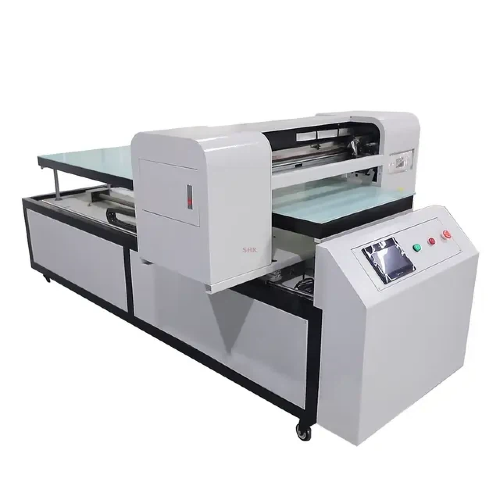
Flatbed UV printers offer a larger print area and higher production capacity compared to desktop models. They are suitable for businesses handling medium-to-large batch orders. Flatbed printers can print directly on flat or slightly curved items, such as acrylic awards, wood plaques, or promotional products.
CCD Visual Positioning UV Printers
CCD visual positioning printers incorporate camera-based detection systems to align prints precisely on irregular or multiple objects. This technology is crucial for high-accuracy customization on curved, flexible, or multi-item setups. Ideal for businesses producing phone cases, promotional gifts, or specialty items where exact positioning is required.
Roll-to-Roll UV Printers
Roll-to-roll printers specialize in printing on flexible materials such as banners, textiles, and labels. They offer high-speed production and can handle continuous media, making them ideal for industrial-scale production in commercial printing environments.
Advantages of Using a UV Printer
Investing in a UV printer offers multiple benefits across different industries and applications:
High-Resolution, Full-Color Printing
Achieve vibrant, detailed prints with CMYK, white, and varnish layers.
Supports 3D effects, gloss/matte finishes, and textured prints.
Versatility in Materials
Print on plastics, TPU, silicone, metal, wood, glass, acrylic, and more.
Handles flat, curved, or irregular surfaces without additional equipment.
Fast Production and Efficiency
Instant curing reduces waiting time.
Streamlined workflow allows faster turnaround for small or bulk orders.
Eco-Friendly Operation
Reduces waste and energy consumption.
Minimizes the use of solvents and traditional printing plates.
Durable Prints
Resistant to scratches, water, and fading.
Ideal for products intended for long-term use.
Supports Customization and Innovation
Perfect for businesses offering personalized promotional items, signage, gifts, or industrial labeling.
These advantages make UV printers indispensable for modern businesses aiming to deliver high-quality, versatile, and durable printed products.
How to Choose the Right UV Printer for Your Needs
Selecting the best UV printer requires careful consideration of several factors:
1. Identify Production Goals
2. Determine Material Requirements
Identify the materials you will primarily print on (e.g., plastic, TPU, metal, glass).
Consider whether pre-treatment or primers are required for optimal adhesion.
3. Evaluate Print Quality Requirements
High-resolution printers (600–1200 DPI) are suitable for detailed logos, photographs, and small text.
Multi-layer printing capabilities allow more complex visual effects.
4. Assess Operational Ease
Touchscreen interfaces, software compatibility, and automatic height adjustments reduce errors and improve workflow efficiency.
5. Consider Maintenance and Total Cost
Choose printers with low maintenance requirements, affordable replacement inks, and reliable parts.
Balance upfront investment with long-term operating costs.
6. Check Technical Support and Warranty
Reliable technical support ensures minimal downtime.
Warranty and training are critical, especially for businesses new to UV printing.
7. Plan for Scalability
Consider potential business growth.
Select a printer that can handle increasing production volumes without sacrificing quality.
Conclusion
Selecting the right UV printer is crucial for achieving high-quality, durable, and versatile prints across a wide range of applications. By considering factors such as print resolution, material compatibility, production scale, ease of operation, maintenance, and support, businesses can ensure that their printer meets both current and future production needs.
Investing in a professional-grade UV printer is a strategic decision that enhances productivity, reduces waste, and delivers exceptional results for clients and customers. Companies like Dongguan Shenghuang Science and Industry Co., Ltd., based in Dongguan, China, offer a wide range of advanced UV printers suitable for small businesses, custom projects, and industrial-scale applications, making them a trusted partner for businesses looking to excel in UV printing technology.
FAQs about UV Printers
Q1: What is a UV printer and how does it work?
A1: A UV printer uses ultraviolet light to instantly cure UV-curable inks, allowing direct printing on a variety of surfaces, including plastic, metal, glass, wood, and silicone.
Q2: Can UV printers print on curved or flexible surfaces?
A2: Yes. Printers with adjustable height or CCD visual positioning can print accurately on curved and flexible materials.
Q3: What types of materials can a UV printer handle?
A3: UV printers can print on plastics, TPU, silicone, glass, metal, wood, acrylic, and more. Some materials may require a primer.
Q4: How do I choose the best UV printer for my business?
A4: Consider your production scale, print size, materials, resolution needs, and desired features such as multi-layer printing and automation.
Q5: Are UV printers suitable for small businesses?
A5: Yes. Desktop UV printers are cost-effective for small batches and custom projects, providing professional-quality prints without large capital investment.
Q6: How long do UV-printed designs last?
A6: UV prints are durable, scratch-resistant, waterproof, and resistant to fading, ensuring long-lasting results under normal use.
Q7: What maintenance is required for a UV printer?
A7: Regular cleaning of print heads, proper ink management, and occasional software updates are essential for consistent performance.
Q8: Can UV printers print multi-color designs and textures?
A8: Yes. Modern UV printers support CMYK, white, varnish layers, and textured finishes, enabling creative and complex designs.


