Introduction
Have you ever wondered how certain images seem to move or change when viewed from different angles? This fascinating effect is created by two advanced printing techniques: holographic printing and lenticular printing.
In this article, we will explore the key differences between these two methods. You will learn how lenticular printing machines create dynamic, eye-catching visuals, and how they compare to holographic printing in various applications.
Holographic Printing: An Overview
What is Holographic Printing?
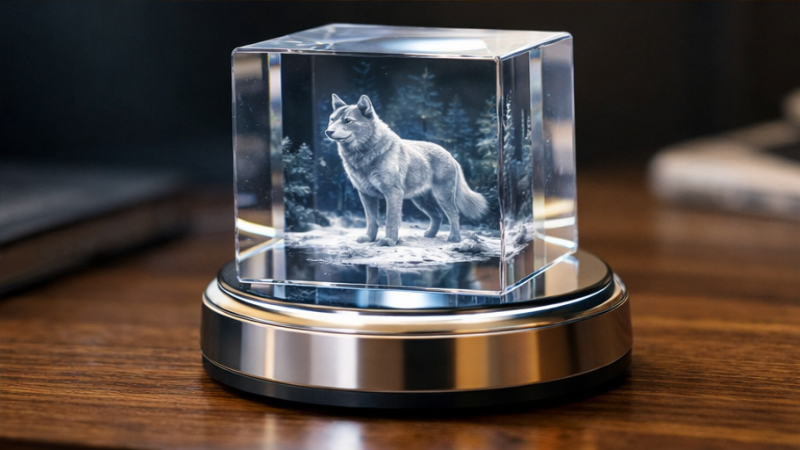
Holographic printing is a technique used to create three-dimensional images on flat surfaces, offering depth and visual effects that change depending on the viewer's angle. Unlike traditional printing that uses ink, this method manipulates light waves to produce images that appear to move or shift. The core principle behind holographic printing lies in capturing and reproducing light patterns, creating the illusion of depth and dimension.
Technology Behind Holograms
Holographic printing relies on laser technology to record and reconstruct light patterns. Here's how it works:
1. Laser Interference: A laser shines onto an object, and the reflected light creates interference patterns.
2. Recording: These patterns are captured on a photographic plate or film.
3. Reconstruction: When the plate is illuminated with light, the original image is reconstructed, providing a 3D visual effect.
This technology enables holographic prints to display lifelike, shifting images without requiring special 3D glasses or devices.
Applications of Holographic Printing
Holographic printing is widely used in various industries for its unique ability to add security and visual appeal:
● Security Labels: Prevent counterfeiting on products, ID cards, and documents.
● Art Collections: Add value and a dynamic touch to art pieces.
● ID Cards & Credit Cards: Enhance authenticity and security features with changing visual effects.
● Packaging: Used in high-end or limited edition packaging to add sophistication and a distinct visual effect.
Lenticular Printing: Understanding the Process
What is Lenticular Printing?
Lenticular printing is a technique used to create dynamic, eye-catching images that can change or move depending on the angle of viewing. This process involves printing multiple images on a special plastic lens called a lenticular lens. These lenses contain an array of tiny lenses that refract light in a way that enables different images to be visible from different angles. The result is a visual effect that can show 3D images, animations, or transitions from one image to another. Lenticular printing is widely used in applications where high visual impact is needed, such as promotional materials and interactive displays.
How Lenticular Printing Machines Work
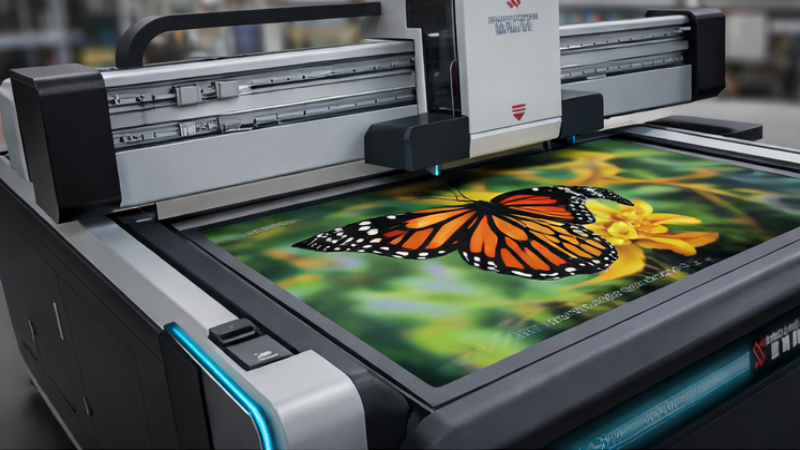
Lenticular printing machines operate by precisely printing multiple images onto a lenticular sheet that is then processed to achieve the desired effect. Here’s a simplified breakdown of the process:
1. Image Preparation: Several images are created or selected for the lenticular effect, often using special software to interlace the images.
2. Interlacing: The images are interlaced into a single file, a technique that arranges the images in a way that allows them to shift or move when viewed at different angles.
3. Printing: The interlaced image is printed onto the lenticular lens using high-resolution printers, often with UV or other advanced printing technologies.
4. Alignment: The lenticular lens is carefully aligned with the printed image to ensure that each image slice aligns perfectly with the lenses, allowing for smooth transitions and effects.
The result is a print that exhibits depth, animation, or flipbook-like transitions as the viewer moves around it.
Applications of Lenticular Printing
Lenticular printing is highly versatile and is used in a wide range of applications that benefit from its dynamic visual effects:
● Marketing and Advertising: Lenticular prints are commonly used for product packaging, display materials, and advertisements that aim to grab attention with moving or 3D visuals.
● Entertainment: Movie posters, collectibles, and album covers often use lenticular printing to create engaging, interactive designs that enhance the viewer's experience.
● Product Packaging: Lenticular printing can be used on packaging to showcase products in a visually captivating way, often in the form of animated characters or rotating visuals.
● Postcards and Promotional Items: Lenticular printing is also used for novelty items like postcards, where shifting images can give the impression of movement or transformation.
Advantages of Lenticular Printing Machines
Lenticular printing machines offer several key advantages that make them ideal for projects requiring dynamic visuals:
● Flexibility in Design: These machines allow for the creation of a wide range of visual effects, from simple animations to complex 3D images.
● Durability: The lenticular process results in prints that are highly resistant to wear, making them suitable for long-term use in various applications, such as posters and packaging.
● High Impact Visuals: Lenticular prints stand out due to their ability to grab attention with their engaging, interactive effects.
● Cost-Effectiveness for High-Volume Runs: While the initial setup can be complex, lenticular printing can become cost-effective for high-volume production runs, especially in advertising and packaging.
Key Differences Between Holographic and Lenticular Printing
Visual Impact and Appearance
The visual effects of holographic and lenticular printing differ significantly in terms of depth, animation, and lighting requirements.
● Holographic Printing: Creates a true 3D effect by manipulating light, giving the impression of depth and shifting images. These prints require specialized lighting, often bright or direct light, to fully reveal their effect. Without the right lighting, the image may appear dim or lack clarity.
● Lenticular Printing: Uses a series of lenses to display multiple images or animations based on the viewing angle. While it can simulate depth or 3D effects, it is more commonly used to create motion or transition between images. Unlike holography, lenticular prints do not need special lighting and can be viewed in standard lighting conditions.
Technology Comparison
The technology behind these two methods is fundamentally different.
● Holographic Printing: Involves light interference and diffraction. A laser records the light reflected from an object, and that light is reconstructed on a medium to create a 3D image. This process requires specialized lasers and precision optics.
● Lenticular Printing: Uses lenticular lenses to manipulate light and display multiple images. These images are interlaced and printed on a plastic lens, which shifts based on the viewer’s angle. Lenticular printing machines precisely align the images to match the lenticular lens, allowing for movement or depth.
Suitability for Different Applications
Each technique has distinct applications based on their visual effects and practical use.
Printing Technology | Best Suited For | Key Applications |
Holographic Printing | Ideal for security, high-end, and artistic applications. | - Security labels - ID cards - High-end packaging - Collectibles - Anti-counterfeiting |
Lenticular Printing | Perfect for dynamic, engaging, and visually striking displays. | - Marketing materials - Posters - Product packaging - Advertisements - Movie posters |
Choosing Between Holographic and Lenticular Printing: Which One to Use?
Considerations for Decision Making
When deciding between holographic and lenticular printing, there are several important factors to consider, depending on the specific needs of your project.
● Visual Effects: If the goal is to create a high level of depth and realism, holographic printing may be a better choice. It is ideal for applications that require intricate light manipulation to create a lifelike 3D appearance, such as security labels or high-end packaging.
● Dynamic Movement: If your project requires animated effects or multiple images transitioning based on the viewer's perspective, lenticular printing may be more suitable. Lenticular printing is particularly effective for producing eye-catching, interactive displays, making it a great option for marketing materials, posters, or packaging that need to engage the audience with movement or 3D visuals.
● Durability: For projects that need durable materials that can withstand handling, lenticular printing machines are often ideal. The lenticular process results in prints that are highly resistant to wear and tear, making them perfect for products like postcards, packaging, and promotional items that will be frequently handled.
Cost Considerations
Here’s a direct comparison of the cost factors involved in both printing methods:
Factor | Holographic Printing | Lenticular Printing |
Setup Cost | Generally lower for simpler applications, like security labels. | Higher due to the complexity of aligning multiple images. |
Printing Flexibility | Best for static designs, such as ID cards and security tags. | Offers more flexibility with animated effects and 3D visuals. |
Lighting Requirements | Requires specialized lighting to show full effect. | Does not require specialized lighting. |
Durability | Suitable for static applications with moderate durability needs. | Highly durable and resistant to wear, perfect for frequent handling. |
Summary of Cost and Suitability
● Holographic printing is more cost-effective for static designs and applications where security and depth are required, but it can involve higher costs if lighting is necessary to appreciate the full effect.
● Lenticular printing, although more expensive due to the complexity of its process, offers greater flexibility in terms of visual effects and durability, making it suitable for interactive displays and high-engagement applications.
Future Trends in Lenticular and Holographic Printing
Advancements in Technology
Both lenticular and holographic printing technologies are undergoing significant advancements as they evolve to meet the growing demands for higher quality and more dynamic visuals.
● Lenticular Printing: One of the key developments is the improvement in lenticular printing machines, which now offer greater precision and faster production speeds. The ability to handle higher-resolution images and larger lenticular lenses has opened up new possibilities for more complex visual effects. Additionally, advancements in interlacing software have enhanced the accuracy and ease of aligning multiple images, allowing for smoother transitions and more intricate animations. As a result, lenticular printing is becoming increasingly viable for larger-scale commercial applications, such as interactive displays and promotional materials.
● Holographic Printing: Similarly, holographic printing is benefitting from innovations in laser technology and materials. New laser systems and light sources are improving the clarity and brightness of holograms, enabling more vivid and detailed 3D effects. Additionally, researchers are exploring new materials that can make holographic printing more affordable and accessible for various industries. These advancements are likely to lead to holograms becoming more common in consumer-facing products, including packaging, labels, and even interactive art displays.
Potential New Applications
The future of lenticular and holographic printing will likely see their expanded use across various sectors, driven by both technological advancements and shifting market needs.
Printing Technology | Future Applications | Industries/Uses |
Lenticular Printing | - Interactive billboards and retail displays. - Digital packaging with 3D effects. - Vehicle wraps and clothing designs with lenticular elements. | - Advertising, Retail, Fashion, Automotive. |
Holographic Printing | - Luxury packaging and consumer electronics. - Integration in augmented and virtual reality (AR/VR). - Smart textiles and wearable technology with dynamic visuals. | - Luxury goods, Consumer electronics, AR/VR, Smart textiles. |
Conclusion
Holographic printing creates a 3D effect by manipulating light, while lenticular printing uses lenses to produce dynamic, angle-dependent images. Both have unique advantages, with lenticular printing machines excelling in producing multiple visual effects and engaging displays. Dongguan Shenghuang Science And Industry Co., Ltd. offers advanced lenticular printing machines, providing durability and flexibility in various applications. Choosing the right method depends on your project’s visual requirements and production needs.
FAQ
Q: What is a lenticular printing machine and how does it work in industrial applications?
A: A lenticular printing machine uses lenticular lenses to produce dynamic, multi-layered images that change based on the viewing angle. It is widely used in packaging, advertising, and branding to create engaging visuals with movement or 3D effects.
Q: How does the cost of a lenticular printing machine compare to other printing methods?
A: While the initial cost of a lenticular printing machine can be higher due to its complexity, it provides long-term value through its ability to create high-impact, durable prints without requiring special lighting, making it cost-effective for large-scale, high-quality production.
Q: What maintenance is required for a lenticular printing machine?
A: Regular maintenance of a lenticular printing machine involves cleaning lenses, recalibrating the alignment of images, and ensuring the machine's precision for optimal performance, especially when handling complex designs.
Q: When should a lenticular printing machine be preferred over holographic printing?
A: A lenticular printing machine is preferred when flexibility in design is needed, such as for producing multiple animated images or 3D effects without special lighting requirements, making it ideal for marketing and promotional materials.


