Introduction
In 2025, small UV printers have become essential tools for businesses. These printers allow companies to create high-quality, customized products quickly and efficiently.
In this article, we’ll explore the small UV printer price in 2025, key factors influencing pricing, and how to choose the right one for your business. You’ll learn how to balance quality with cost-effectiveness for long-term success.
What Affects Small UV Printer Prices in 2025?
Printer Features and Technology
The price of a small UV printer is heavily influenced by its features and technology. More advanced models with features such as automatic cleaning systems, higher print resolution, and larger print sizes tend to be more expensive. Printers that offer faster print speeds and better ink management typically come with a higher price tag, as these functionalities boost productivity and performance.
In contrast, basic small UV printers without advanced features are more affordable but may require more manual operation and slower print speeds. It’s crucial for businesses to weigh the trade-off between added features and affordability, considering both the initial investment and long-term needs.
Technology and Performance
Technology upgrades play a significant role in the pricing of small UV printers. Models with the latest technology, such as enhanced UV ink curing systems, offer better print quality and improved efficiency. These advanced systems ensure faster drying times, leading to smoother workflow and higher production speeds. While these printers come at a higher cost, they are more efficient, making them a worthwhile investment for businesses with high-volume production demands. Investing in these advanced models can reduce operational costs by improving overall efficiency.
Material Compatibility and Versatility
The price of small UV printers is also impacted by their ability to print on a variety of materials. Printers that support a wider range of substrates, such as wood, glass, metal, and textiles, are generally priced higher. The ability to work with multiple materials opens up more opportunities for businesses to offer diverse products, from custom promotional items to personalized gifts.
Furthermore, printers capable of handling thicker materials, such as acrylic, foam, or wood panels, also come at a higher price point. This added versatility allows businesses to expand their range of products but contributes to the higher cost of the printer. The versatility in substrate handling makes a printer more adaptable to different projects, but it also impacts the overall price.
Price Ranges for Small UV Printers in 2025
Desktop UV Printers
Entry-level small UV printers that fall into the desktop category are priced between $2,000 and $6,000. These printers are ideal for businesses focusing on low-volume, custom printing. The affordability makes them an attractive choice for startups, small custom print shops, and entrepreneurs offering personalized products such as custom T-shirts, phone cases, or promotional items.
For small businesses with limited space and production volume, desktop small UV printers offer an efficient solution. These compact printers can deliver high-quality, durable prints while saving on floor space. However, while they are budget-friendly and versatile, they are better suited for businesses with smaller production runs or niche markets. The price range typically reflects their ability to handle lighter workloads, making them perfect for personalized items but less ideal for mass production.
Pros | Cons |
Compact and affordable | Slower print speeds |
Ideal for small-scale, custom projects | Smaller print areas |
Great for low-volume, custom printing | May not be suitable for high-volume production |
Small Industrial UV Printers
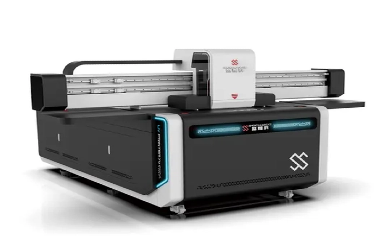
For businesses that need to produce larger quantities of custom items efficiently, small industrial UV printers provide a more robust solution. These printers are designed for higher production volumes, with faster print speeds, larger print areas, and better handling of diverse materials. Small industrial UV printers typically range from $6,000 to $15,000, depending on the features and technology they offer.
These printers are built to handle bulk orders and high-demand production, making them ideal for businesses looking to scale. They can print on a wider variety of substrates, such as wood, acrylic, and metal, with more advanced technology that reduces downtime and boosts output. While the initial investment is higher, the increased capacity and efficiency can make them a cost-effective choice for businesses that require higher throughput and speed. Small industrial UV printers are an excellent choice for e-commerce businesses, larger custom print shops, and businesses in need of higher-volume production.
Pros | Cons |
Faster print speeds | Higher initial cost |
Larger print areas | Larger footprint, requiring more space |
Capable of handling high volumes | May be too large for small spaces |
Operational Costs Beyond the Initial Purchase Price
Ink and Material Costs
Ongoing costs associated with small UV printers extend far beyond the initial purchase price. One of the most significant expenses is ink consumption. UV inks are often more expensive than traditional inks, but they offer better durability and higher print quality. The amount of ink consumed per print job depends on several factors, including the complexity of the design and the material used. Businesses need to account for these costs when evaluating the total cost of ownership of a small UV printer.
Material costs also play a vital role in operational expenses. Printing on high-end substrates like glass, metal, or custom vinyl will increase material costs. On the other hand, cheaper materials like paper or basic fabric will help reduce ongoing expenses. It's essential for businesses to find a balance between the quality of materials and the pricing of their products, ensuring they can maintain profitability without sacrificing quality.
Maintenance and Upkeep
Routine maintenance is crucial to ensure the longevity and efficiency of a small UV printer. Regular tasks include cleaning print heads, checking ink systems, and ensuring the printer is properly calibrated. These activities are typically low-cost but essential for maintaining the printer’s performance and preventing more expensive repairs down the road.
Long-term cost efficiency is also impacted by the quality of the printer. Investing in higher-quality UV printers can save businesses money over time by reducing the need for frequent maintenance and minimizing ink waste. Models that offer better ink efficiency or come with automated cleaning systems may have higher upfront costs but provide long-term savings. This makes the higher initial investment worthwhile by improving profitability and reducing operational expenses.
How to Choose the Right Small UV Printer for Your Business
Consider Your Business Needs and Production Volume
If your business focuses on low-volume, custom projects, such as personalized gifts or small custom orders, a desktop small UV printer will likely be sufficient. These printers are compact, affordable, and ideal for businesses just starting out or those with limited production needs. They are perfect for creating custom T-shirts, phone cases, or promotional items without breaking the budget.
For businesses with higher production needs or those looking to scale, a small industrial UV printer is a better choice. These printers offer faster speeds, larger print areas, and higher capacity, making them ideal for businesses that need to fulfill bulk orders or cater to larger markets, improving overall efficiency and throughput.
Balancing Price with Performance
When choosing a small UV printer, it’s important to strike a balance between price and performance. While it’s tempting to opt for cheaper models, investing in a printer with the right features for your business needs can save money in the long run. A high-quality printer that meets your production volume and material requirements will provide better performance and help avoid costly upgrades later on.
Businesses must evaluate how much they are willing to spend versus the output they expect. A small UV printer priced at a higher level may offer advanced features and better performance, but if your business doesn’t need those capabilities, the investment might not be justified. Assess the printer’s cost in relation to your expected output and long-term business goals to ensure a smart, cost-effective decision.
Conclusion
Selecting the right small UV printer for your business in 2025 depends on factors like product offerings, production volume, and budget. Whether you choose an affordable desktop model or an advanced small industrial printer, aligning price, features, and performance with your business goals ensures the best choice.The right small UV printer can boost efficiency, reduce operational costs, and help meet growing demand. As technology evolves, investing in a high-quality printer can bring significant value to your business for years to come.
Dongguan Shenghuang Science and Industry Co., Ltd. offers reliable small UV printers that cater to both low-volume and high-volume production needs. Their products provide excellent performance, reducing costs and enhancing business efficiency.
FAQ
Q: What is the typical Small UV Printer Price in 2025?
A: The Small UV Printer Price in 2025 typically ranges from $2,000 to $15,000, depending on the model. Desktop models are more affordable, usually between $2,000 and $6,000, while small industrial printers with higher production capacities range from $6,000 to $15,000.
Q: What factors affect the Small UV Printer Price?
A: The Small UV Printer Price depends on factors such as print quality, resolution, material compatibility, and production speed. Advanced models with additional features like faster print speeds or automatic cleaning systems tend to be more expensive.
Q: Why is the Small UV Printer Price higher for industrial models?
A: Small UV Printer prices are higher for industrial models due to their larger print areas, faster speeds, and better performance. These printers are designed for high-volume production, making them ideal for businesses that need to scale their operations.
Q: How can I save on Small UV Printer Price?
A: To save on Small UV Printer Price, consider opting for a desktop model if your business deals with low-volume, custom prints. Choosing models with fewer advanced features can also reduce costs without compromising print quality for smaller operations.
Q: Does the Small UV Printer price include maintenance costs?
A: No, the Small UV Printer price usually does not include maintenance costs. Regular upkeep like print head cleaning, ink system checks, and calibration can add to the overall cost of ownership.


